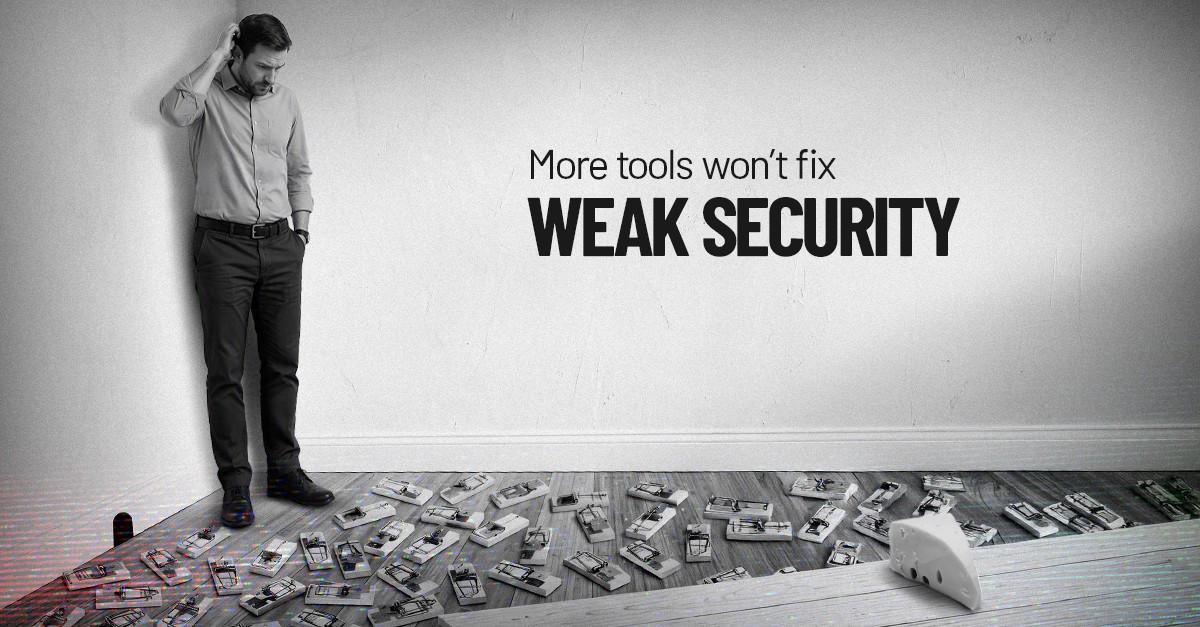
Buying another cybersecurity product can feel like progress. But when tools accumulate without a clear strategy, the result may be more dashboards, more alerts, more expense - and less confidence that anyone sees the full picture.
The strongest security environment is not necessarily the one with the most products. It is the one in which every tool has a defined role, the tools work together and someone is accountable for acting on what they reveal.
Complexity creates blind spots
A growing organization may use separate products for email, devices, backups, identity, remote access and cloud applications. Each may solve a real problem. Yet gaps appear when ownership is unclear, settings are inconsistent or no one can explain how the pieces connect.
A tool may protect the laptops you had two years ago but miss the devices added since. A security feature may have been disabled during troubleshooting and never restored. A former employee may remain active in one cloud application even though the main account was closed.
Alerts require decisions
Security alerts are valuable only when someone can review, prioritize and respond to them. When several products generate independent notifications, important signals can disappear in the noise. Leaders should know who receives alerts, what qualifies as urgent, how quickly action is expected and who communicates with the organization during an incident.
Overlap can increase cost without reducing risk
Two products may perform similar functions while another important area remains uncovered. Reviewing licenses, features and responsibilities can reveal duplicate spending and clarify which platform should be trusted during an incident.
Start with the business, not the product
Identify the systems and information your organization cannot operate without. Consider what would happen if email stopped, files became unavailable, payroll was redirected or customer information was exposed. Then map each major risk to a preventive control, a monitoring process and a recovery plan.
Your IT provider should be able to explain that map in plain language. You should understand what is protected, what is not, how threats are identified and what happens next when something goes wrong.
Heritage Digital helps organizations simplify their security environments, close coverage gaps and connect technology decisions to productivity, compliance, customer trust and continuity.
Is your security stack working as one system? Call 843-699-1001 or email info@heritagedigital.com
About the Author

Marty Parker
Owner & CEO
Marty is the Owner & CEO of Heritage Digital. With over 30 years of experience in building and leading top-notch IT teams, Marty has a rich background in both the manufacturing and healthcare sectors. He spent 13 years in each industry before taking the helm at Heritage Digital. Before leading Heritage Digital, he served as the CIO of Carolinas Hospital System (now MUSC Health Florence Medical Center). Marty is dedicated to educating and safeguarding people from cyber threats.