When most leaders think about downtime, they picture something dramatic — a cyberattack, a power outage, or a major system failure. In reality, downtime is rarely dramatic. It’s usually something small.
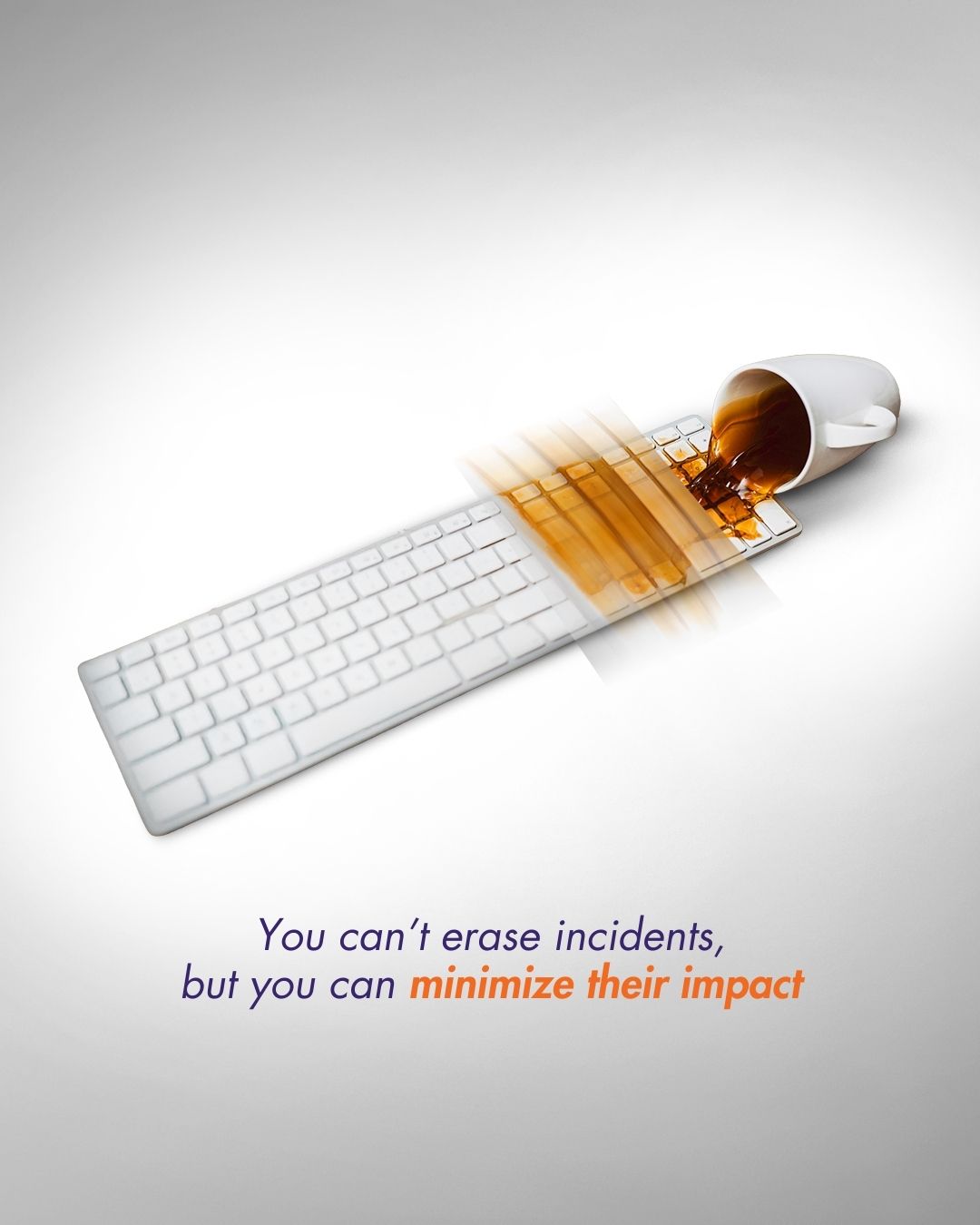
A spilled coffee. A deleted file. A failed update. A device reaching the end of its life. These moments don’t make headlines, but they quietly interrupt productivity, delay customers, and cost hours of revenue.
Downtime is a business problem, not a technology problem. The issue is rarely the incident itself. It’s what happens next. When something breaks, how quickly can your team get back to work? Is the data accessible? Does the employee wait minutes — or hours? The difference between those answers is the difference between disruption and continuity.
Small issues become expensive when recovery is unclear. Most businesses don’t lose time because of catastrophic failure. They lose time because recovery isn’t defined. Files take too long to restore. Systems require manual troubleshooting. Teams wait for direction instead of moving forward. That delay compounds across the organization.
Prevention matters, but it isn’t enough. You can reduce risk, but you can’t eliminate it. Something will eventually go wrong. The real advantage comes from knowing exactly how your business responds when it does.
At Heritage Digital, we focus on reducing downtime by making recovery predictable. Because in day-to-day operations, it’s not the size of the problem that matters — it’s how quickly it disappears.
Call us at 843-699-1001 or book a consultation.
About the Author

Marty Parker
Owner & CEO
Marty is the Owner & CEO of Heritage Digital. With over 30 years of experience in building and leading top-notch IT teams, Marty has a rich background in both the manufacturing and healthcare sectors. He spent 13 years in each industry before taking the helm at Heritage Digital. Before leading Heritage Digital, he served as the CIO of Carolinas Hospital System (now MUSC Health Florence Medical Center). Marty is dedicated to educating and safeguarding people from cyber threats.